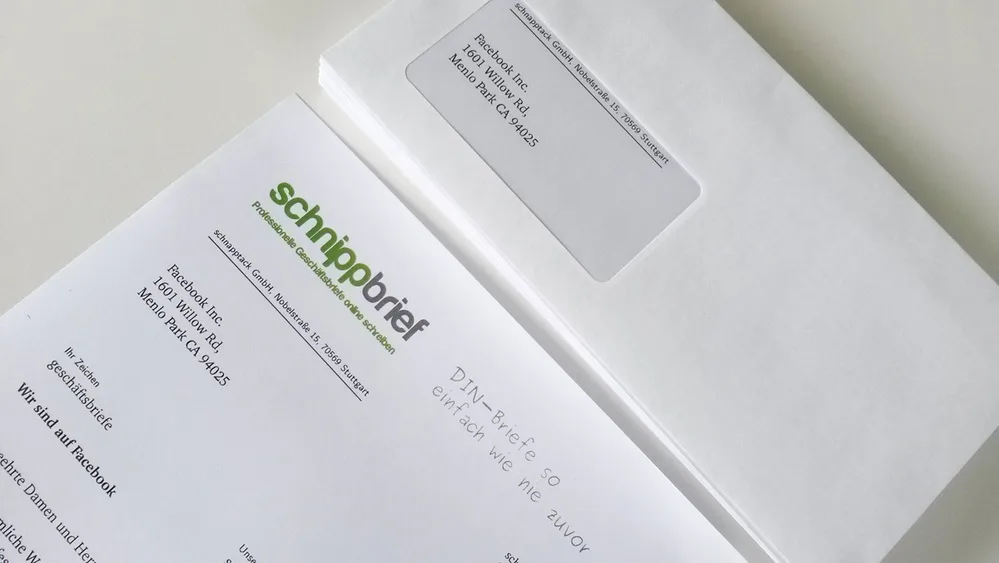
Corporate identity in German businesses extends beyond logos and colour palettes — it runs through every document that leaves the company, and DIN 5008 formatting consistency is a key part of how external audiences perceive an organisation.
What Corporate Identity Means in German Business Culture
Corporate identity (CI) in Germany encompasses all the visual and communicative signals that a company sends to the outside world. Most discussions of CI focus on logos, brand colours, and website design — the visible surface of a company's identity. But in German business culture, which places high value on precision and reliability, the quality of written correspondence is an equally important signal.
A company whose invoices look different from its contracts, whose offers use a different font from its payment reminders, and whose application rejection letters omit half the DIN 5008 structural elements is sending a message — even if no one in the company has consciously intended to. The message is that internal standards are inconsistent, and if internal standards are inconsistent, external partners may reasonably ask what else is inconsistent.
The Reliability Signal
In a culture where the formal letter has been a primary medium of commerce for over a century, document quality functions as a proxy for organisational reliability. A supplier who consistently sends well-formatted, complete, and correctly structured correspondence is perceived as more reliable than one whose documents look different every time. This perception may not be entirely rational, but it is real and widely shared in German B2B contexts.
The Problem of Decentralised Templates
The most common cause of inconsistency is the decentralised template model: each department has its own version of the letterhead, saved locally on individual workstations or on shared drives that are not regularly maintained. Over time, these local copies drift. The finance department still uses the old logo from 2019. The HR department updated the address after the office move but forgot to change the telephone number. Sales has a custom layout it developed for its client proposals that no longer matches the brand guidelines.
When a client receives three different documents from the same company that look visually inconsistent with each other, it creates a subliminal impression of disorder — even if the content of each document is perfectly accurate.
The Argument for a Central DIN 5008-Compliant Letterhead
A single, centrally maintained letterhead template — built to DIN 5008 specifications — solves this problem at the source. When every department starts from the same template, and when that template is updated centrally whenever address, logo, or branding changes occur, the consistency problem disappears. The template becomes the single source of truth for how the company presents itself in written correspondence.
Implementing Consistent Templates Across Departments
Centralise Storage and Access
Store the authoritative template versions in a location that all employees can access but only designated administrators can modify — a company intranet, a cloud document management system, or a shared network drive with access controls. This prevents local copies from proliferating.
Version Templates Clearly
Include a version number and last-updated date in the template file metadata (not visible on the letter itself). When templates are updated, communicate the change actively rather than relying on employees to check for updates.
Handling Updates
When a company changes its address, telephone number, logo, or legal form, the letterhead update needs to be coordinated across all template categories simultaneously — general letters, invoices, offers, contracts, HR correspondence, and any other document type in regular use. Building a checklist of all template variants and maintaining it alongside the templates themselves makes this process manageable.
Pre-built DIN 5008-compliant templates covering the most common business document types are available at smartdexblog.de. For guidance on corporate identity management in German-speaking markets, the Design Made in Germany resource offers relevant context on German design culture and professional standards.